


Remake Review: The Taking Of Pelham 123 (1974/2009)
- Apr 19, 2017
- 3 min read
A simple premise, a number of armed men take over a train can, Pelham 123, and demand ransom in exchange for hostages. They give the city of New York one hour to deliver the money and every minute after they'll execute a prisoner. Differing times and directors however, create wildly different films, both with their own problems but both of which are wholly entertaining.


The 1974 film is a cut and dry crime thriller, straight forward and two the point. Directed by Joseph Sargent, a man best known for his work on Star Trek and the deplorable jaws The Revenge, it's easily his best work. While it's cast is small, the excellent Robert Shaw as the main villain of the piece brings a soft spoken malice to the film which helps it stand out above others like it. The 2009 remake on the other hand, is directed by personal favourite Tony Scott, the man behind almost every other Denzel Washington crime movie as well as Unstoppable, the other movie about Denzel and trains. It's frenetic, fast paced and often teeters on the edge of chaotic, though it brings with it a plethora on new ideas as well as a decent, if not memorable, villain in the form of John Travolta.
While both films follow the major story beats in a mostly identical manner, the character of Garber (Walter Matthau - 1974/Denzel Washington - 2009), the go between for Ryder (Robert Shaw - 1974/John Travolta - 2009) and the mayor of New York, is wildly different. In the original film he's a railway cop trying to deal with both the men running the railway and the cops, the main thing is that he knows what he's doing. In 2009 however, he's portrayed as a railway dispatcher, someone who is completely unprepared to deal with a hostage situation. These differing portrayals each have their own small impacts with Matthau being for more decisive in his actions while Washington tends to look to those around him for aid. While Washington is undeniably the more interesting of the two as his character is far more layered, there is an almost irrelevant side-plot attatched to him that's difficult to ignore and Matthau has a far better ending. Both are decent in their own ways but Denzel manages to push ahead due to better acting and an overall better written Garber.


Tony Scott may have beaten Joseph Sargent in the hero department, he can't hold a candle to the Robert Shaw's villain. While Travolta is entertaining and his actual plan is more in depth that a simple robbery, Shaw is softly spoken and terrifying, right down to what might just be the best villain death in history. He's slow to anger and even when he flips his lid he doesn't show it. He's cold and calculated and almost the polar opposite to Travolta's loud and excessive character. While 2009's Ryder is fun to watch, I doubt I'll forget Robert Shaw's portrayal any time soon.

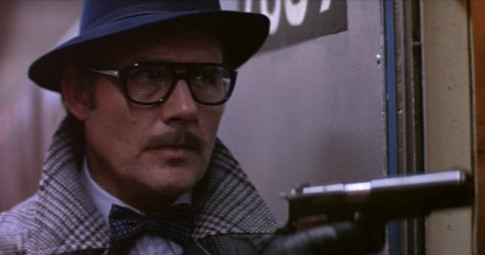


Both films have their own styles. Sargent brings a pseudo 1960's crime vibe combined with 70's action along with plenty of clean camera work. While you probably won't notice it, there's distinctly different vibes for scenes involving Matthau than there is with Shaw and it makes for some interesting composition. Tony Scott however has an incredibly intense style, one that is unlike any other. Frenetic, kinetic, filled with image manipulation and colour variations. While this style works well in a number of his films, namely Man On Fire, here it's a little hit an miss. In the more intense, action heavy scenes, it adds even more intensity but in the quieter, conversation scenes, it feels intrusive and confusing. While neither films style is perfect, the 1974 film is certainly easier to watch, even in 2009's attempt does have its moments.
So, should you watch The Taking Of Pelham 123, and which version is worth spending two hours of your time viewing. It's simple, both. Each film brings its own pros and cons and it makes an interesting comparison to view them both. They're both pretty solid movies in their own way and are definitely worth the watch.
Comments